

When you think about leadership in youth soccer, what comes to mind?
Probably the team captain. Maybe that kid who rallies everyone with a pre-game speech. The player who organizes the team huddle.
And sure, those are all examples of leadership.
But here’s what most parents don’t realize: leadership in soccer comes in dozens of different forms. Beyond the captain or the star striker or the loudest voice in the changing room.
Your child might already be leading their team in ways neither of you have recognized yet.
Today we’re going to expand what leadership means in youth soccer and show you how to help your child develop their natural leadership abilities, whatever form those take.
The Problem With How We Think About Leadership
Most parents and young players have a narrow view of what leadership looks like on a soccer team.
The captain giving a pre-game speech. The experienced player calling out positions. The coach organizing tactics and making tough decisions.
And because leadership looks like that in our minds, your child probably thinks: “Well, I’m not like that, so I guess I’m not a leader.”
They’re wrong. That’s just one type of leadership. There are countless others happening on every youth soccer pitch.
Leadership Beyond the Armband
Here’s the first thing you need to help your child understand: leadership has nothing to do with titles or positions.
They don’t need the captain’s armband to be a leader. They don’t need to be a starter. They don’t even need to be the most talented player on the team.
Leadership is about influence. About impact. About making the players around them better in some way.
And that can happen in a thousand different ways on a soccer pitch.
Research from sports psychologists like Jean Côté has shown that youth athletes develop leadership through what he calls “deliberate play” and social interactions, not just through formal captain roles. The most impactful leaders in youth sports often aren’t wearing armbands at all.
Your Child Is Probably Already Leading
Think about your child’s behavior at training and in matches.
Do they arrive early and work hard, setting an example for teammates? That’s leadership.
Do they encourage a teammate who just made a mistake? That’s leadership.
Do they keep their composure when the game gets chaotic and help others stay calm? That’s leadership.
Do they notice tactical problems and quietly suggest solutions? That’s leadership.
Leadership happens in quiet moments, in small actions, in the way your child carries themselves on the pitch. Beyond just standing in front of everyone and giving orders.
They might already be a leader and neither of you realize it.
There Are Many Ways to Lead
Let’s get into the different frameworks sports psychologists use to think about leadership. There’s no single “right” way to categorize it, but understanding these different styles helps you recognize the breadth of leadership in youth soccer.
Framework 1: Situational Leadership
This framework, developed by leadership researchers Hersey and Blanchard, says effective leaders adjust their style based on what the situation needs.
Directing: Telling teammates exactly what to do and how to do it. Useful when players are new to a position or the situation is urgent (like organizing a defensive wall quickly).
Coaching: Guiding and developing teammates, asking questions and helping them learn. Useful when players have some experience but need support (like helping a younger player understand positioning).
Supporting: Collaborating and encouraging, letting teammates take the lead while backing them up. Useful when players are competent but need confidence (like a midfielder trusting a winger to make the right run).
Delegating: Stepping back and empowering others to make decisions. Useful when teammates are experienced and capable (like a center back trusting fullbacks to handle their zones independently).
Great young leaders learn to move between these styles depending on what the team needs.
Framework 2: Leadership by Approach
This framework focuses on a player’s natural style or approach to leading.
Authoritative/Visionary: Setting the direction and inspiring teammates toward a goal. The player saying “here’s how we’re going to break down their defense, follow my lead.”
Democratic/Collaborative: Involving everyone in decisions and valuing input. The player saying “what do you all think we should do differently in the second half?”
Servant Leadership: Leading by supporting others and helping them succeed. The player saying “what do you need from me to play your best?”
Pacesetting: Leading by example, setting a high standard through their own performance. The player saying through their actions “this is the work rate we need, watch me.”
Different match situations call for different approaches. The best young leaders learn to tap into multiple styles.
Framework 3: How Young Players Influence
This framework looks at the primary way a player creates impact on their team.
The Vocal Leader: Communicates, motivates, and organizes teammates with their words. They’re calling for the ball, directing positioning, encouraging effort.
The Lead-By-Example Leader: Shows the way through their actions and work ethic. Their commitment in training and matches speaks louder than any words.
The Strategic Leader: Thinks ahead, recognizes patterns, and helps the team navigate tactical challenges. They see the game developing and help teammates adjust.
The Connector: Builds relationships, creates team culture, and makes sure everyone feels included. They’re the glue that holds the team together socially, and is a big driver towards building a great team culture.
Notice how different these are? They’re all leadership on a soccer pitch, but they look completely different in practice.
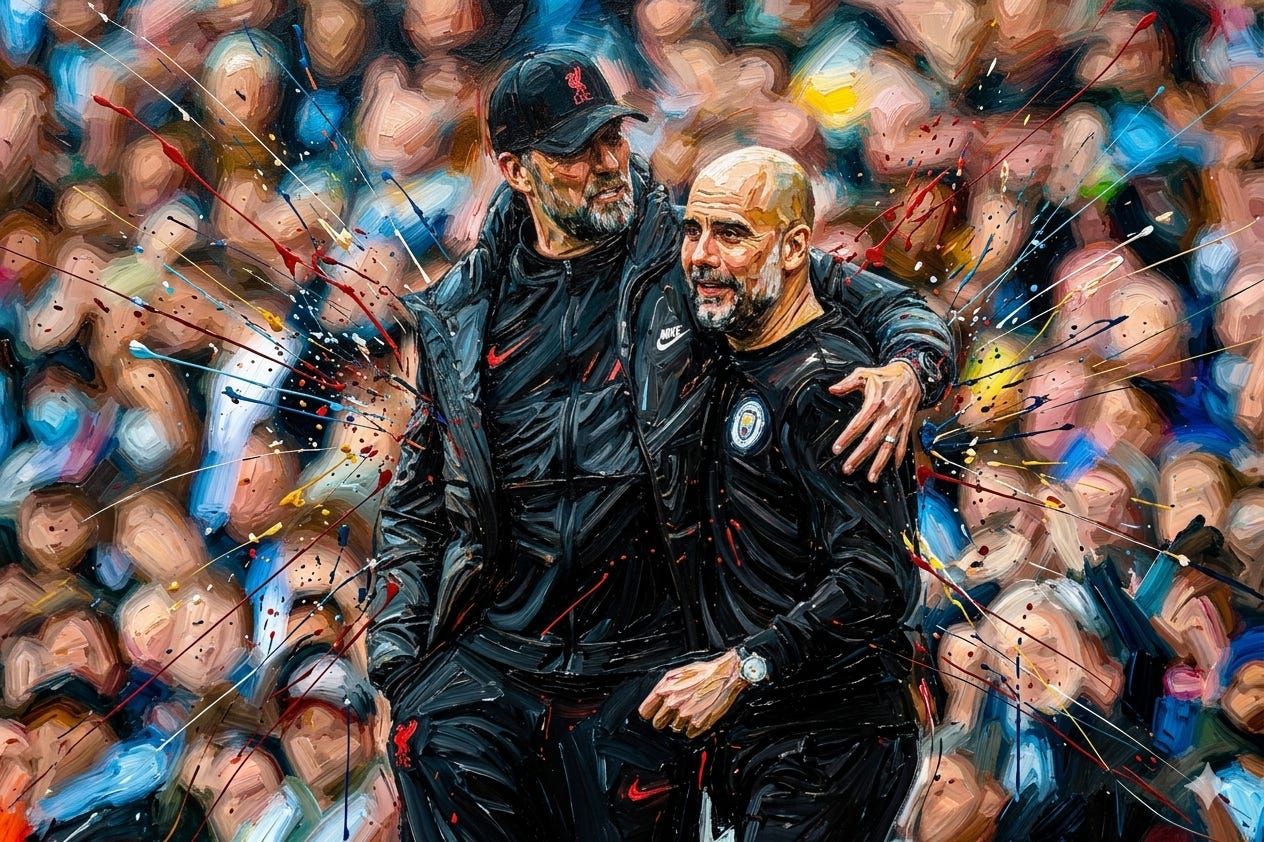
World-Class Coaches, Totally Different Styles
Want proof that there’s no “one right way” to lead? Let’s look at some of the most successful soccer coaches in the world.
Pep Guardiola: The Tactical Perfectionist
Guardiola has won league titles and Champions League trophies with Barcelona, Bayern Munich, and Manchester City.
His style? Cerebral. Meticulous. Demanding.
He’s all about tactical preparation and positional perfection. He studies opponents obsessively. Every training session has a purpose. His players need to execute his vision with precision.
He leads through control, preparation, and tactical brilliance.
His players respect him because he makes them better through his tactical genius and attention to detail.
Jürgen Klopp: The Emotional Connector
Klopp won the Champions League and Premier League with Liverpool, breaking decades-long droughts.
His style? Completely different from Guardiola.
Klopp is emotional, energetic, relationship-focused. He hugs his players. He celebrates with them. He makes them feel like family. His teams play with intensity and belief that comes from connection, not just tactics.
He doesn’t obsess over tactical perfection like Guardiola. He creates an environment where players believe in themselves and each other, then unleashes that energy.
He leads through emotion, connection, and inspiration.
The Rivalry
Here’s the remarkable part: Guardiola and Klopp faced each other for years in the Premier League. Their teams battled for titles that came down to single points.
Totally different leadership styles. Both incredibly successful.
That’s the lesson. There’s no single formula for great leadership in soccer.
What This Means for Your Child
So why does all this matter for your young soccer player?
Because you need to help them understand there’s not just one way to be a leader on their team.
They don’t have to be like their coach. They don’t have to be loud or give speeches or wear the armband.
They just need to figure out what kind of leader they naturally are, and develop that.
Maybe they’re a lead-by-example player who arrives early to training and works harder than everyone else.
Maybe they’re the one who notices when a teammate is struggling and checks in on them.
Maybe they’re the tactical thinker who helps the team solve problems during matches.
Maybe they’re the vocal organizer who keeps everyone positioned correctly.
All of those are leadership. All of them matter. All of them make soccer teams better.
Research from sport psychology professor Sophia Jowett shows that peer leadership (leadership from teammates, not just coaches or captains) significantly impacts team cohesion and performance in youth sports. Your child’s leadership, whatever form it takes, genuinely matters.
Leadership Comes From Being Yourself
Here’s a trap many young players fall into: they try to lead like someone they admire, even if that doesn’t fit who they actually are.
A naturally quiet player tries to be the vocal, rah-rah leader because that’s what they think leadership looks like. It feels fake to their teammates. Doesn’t work.
Or a player tries to copy their coach’s authoritative style when they’re actually better at supporting and encouraging teammates.
Real leadership is authentic. It comes from being genuinely themselves and finding the way they naturally influence others.
As parents, our job is to help our children recognize their natural leadership style and develop it, not push them to lead the way we think leadership should look.
The Different Ways Your Child Might Already Be Leading
Let’s get practical. Here are some ways leadership shows up in youth soccer players that often go unrecognized:
Your child might be leading if they:
Consistently give maximum effort in training, raising the standard for everyone
Celebrate and support teammates even when they are on the bench
Help new or younger players feel welcome and learn the team culture
Stay positive and composed when things go wrong, helping teammates stay calm
Hold themselves accountable for mistakes, showing others it’s safe to do the same
Ask good questions in team talks that help everyone think differently about tactics
Notice when a teammate is struggling and check in on them
Do the small things right (proper warm-up, recovery, studying the game) that others skip
Celebrate teammates’ success genuinely, not just when it benefits them personally
Stay focused on team goals even when their individual performance isn’t great
See how many different ways there are to lead? Your child is probably doing some of these already without thinking about it as leadership.
Leadership Is a Skill You Develop
One more important thing: leadership can be learned and developed over time. Some kids might have natural tendencies that make certain leadership styles easier. But any young player can learn to lead effectively.
Guardiola wasn’t born a tactical genius. He studied the game obsessively for decades.
Klopp wasn’t born knowing how to connect with players. He learned what worked through experience and leaning on his own personality.
Your child can develop leadership skills. They can get better at influencing teammates positively. They can learn to lead in ways that feel authentic to who they are.
It just takes awareness, intention, and practice. And that’s where you come in as a parent.
How to Help Your Child Develop Their Leadership
On Friday, we’ll give you a practical framework and specific conversation guides to help your child identify their natural leadership style and develop it intentionally.
For now, here’s what you can do:
Start noticing. Pay attention to the ways your child already influences their teammates. Point out moments when you see them leading, even in small ways. “I noticed you encouraged Sarah after she lost the ball. That’s leadership.”
Ask curious questions. Instead of telling them how to lead, ask: “Who on your team do you think is a good leader? What do they do that makes them a leader?” Help them see leadership in action.
Avoid pushing them toward a style that doesn’t fit. If your child is naturally quiet, don’t push them to be vocal. Help them see that leading by example is just as valuable.
Final Thought
Your child is already a leader in some way. They just might not recognize it yet.
Leadership in youth soccer comes in countless forms. Vocal and quiet. Strategic and emotional. By example and through connection.
There’s no single right way to do it. The world’s most successful coaches prove that every day.
Your job as a parent isn’t to make your child lead like the team captain or like you think a leader should be. It’s to help them figure out how they naturally lead, and do more of that, more intentionally.
On Friday, we’ll give you the tools to do exactly that.
For now, just start paying attention to the ways your child already influences their teammates.
You might be surprised by what you notice.
References:
Côté, J., & Fraser-Thomas, J. (2007). Youth involvement in sport. In P. Crocker (Ed.), Introduction to Sport Psychology: A Canadian Perspective. Pearson Prentice Hall.
Hersey, P., & Blanchard, K. H. (1969). Life cycle theory of leadership. Training & Development Journal, 23(5), 26-34.
Jowett, S., & Chaundy, V. (2004). An investigation into the impact of coach leadership and coach-athlete relationship on group cohesion. Group Dynamics: Theory, Research, and Practice, 8(4), 302-311.